Wild Foods Guide · Acorns
Acorn Flour: How to Gather, Leach and Use California's Original Staple Food
By Kyle Dall · Redding Forager's Association
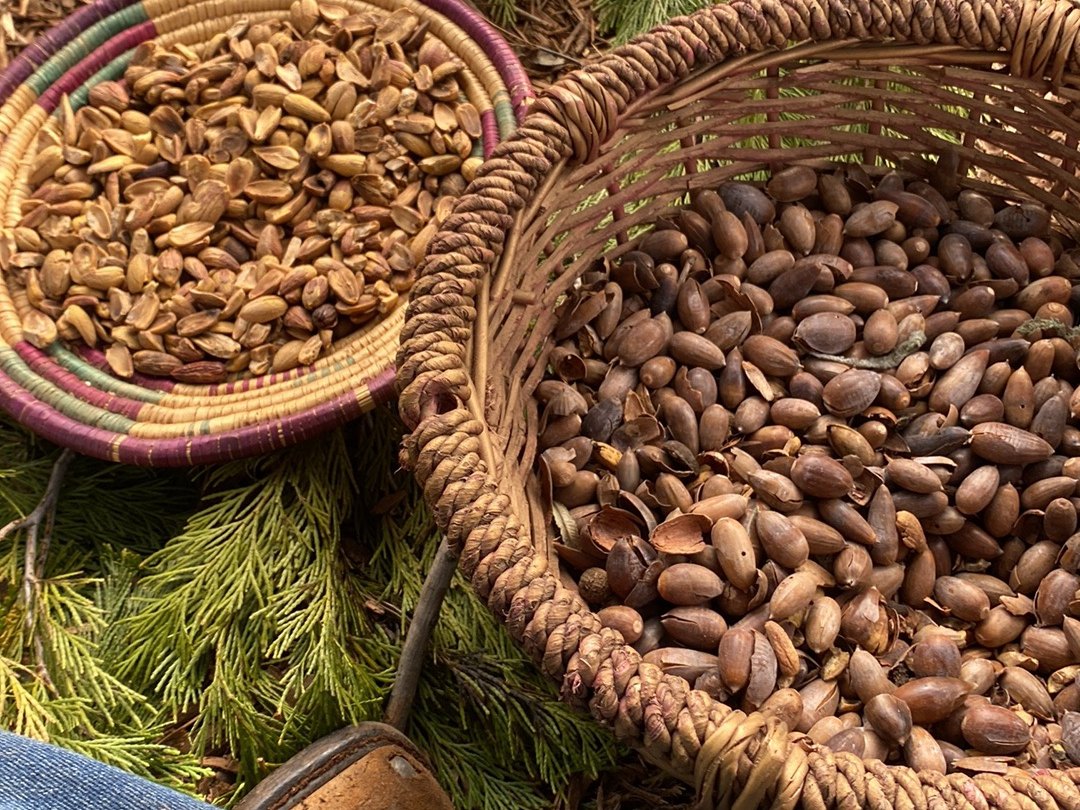
Every fall the oaks around Redding drop more food than we could ever eat. For thousands of years acorns were a staple across California, and in some tribes they made up as much as half the diet. Today most people walk right over them on the way to the grocery store.
I like to call acorns rice and beans in one nut. They're loaded with healthy fats, carbs, protein and fiber, and they're free for the gathering. Raw acorns are bitter with tannins, but with a little patience they become a mild, nutty, gluten-free flour. Here's how we make ours.
When and where to find acorns
Oaks drop their acorns in waves. The first drop, in late August and early September, is mostly the tree shedding its bad nuts: moldy, wormy or deformed. The good acorns start falling around the fall equinox and keep coming into November.
Some of the easiest gathering is on sidewalks, driveways and parking lots, where acorns sit in plain sight and people are happy to see them go. In the woods, look for open oak woodland where you can get under the trees, and slopes where acorns roll into piles. Always ask before gathering on private land.
Which oaks to gather from
California has around 20 kinds of oaks, and all true oak acorns can be eaten once the tannins are leached out. These four are the most common around Redding and Shasta County:
- Valley oak (Quercus lobata). Our biggest oaks, with deeply lobed leaves and long, slender acorns that fall in October and November.
- Blue oak (Q. douglasii). Bluish-gray, leathery leaves and plump acorns. Common in the foothills and chaparral.
- California black oak (Q. kelloggii). Big lobed leaves with bristle tips and short, dark acorns. Found a little higher in the hills.
- Interior live oak (Q. wislizeni). Evergreen, with small, stiff, spiny leaves and skinny acorns.
White oak or red oak?
Valley and blue oaks are white oaks. Their acorns are usually lower in tannins, so they leach faster. They also sprout in their first winter, so gather them early in the season, before they germinate.
Black oaks and interior live oaks are red oaks. Their acorns carry more tannins and take longer to leach, but they wait until spring to sprout, so you can keep gathering them later in the season. Crack one open: red oak shells have a fuzzy lining inside.
How to gather and sort
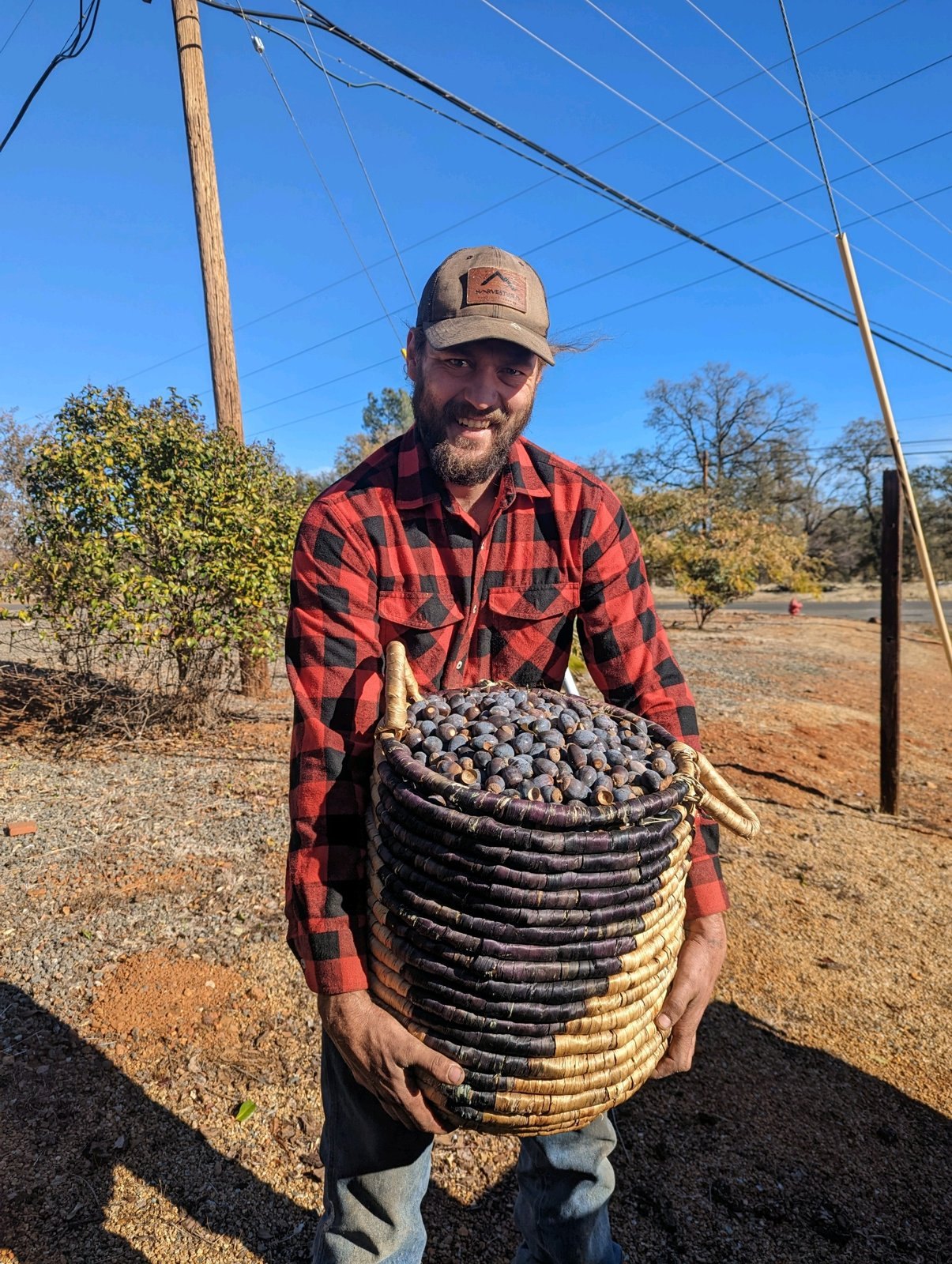
Pick acorns up off the ground and skip any that are green or have a small round hole. That hole means a weevil got there first. At home, drop them in a bucket of water. Most floaters are bad and can go back to the woods.
Dry the good ones in their shells in a warm, airy spot for a week or two. Damp acorns mold fast.
Whole, unleached acorns in the shell keep almost indefinitely in a dry pantry. We tuck mugwort and cedar leaves in with ours to keep pests away. Store your acorns whole, and only shell, grind and leach what you plan to use fairly soon.
How to leach acorns and make flour
- Shell. Crack the acorns and pick out the nutmeats. Toss any with dark spots or mold.
- Grind coarse. A blender or food processor with water works well.
- Cold leach. Cover the meal with cold water and change the water once or twice a day. It can take several days to a couple of weeks, depending on the oak. Taste a pinch each day. When the bitterness is gone, it's ready.
- Dry completely. Squeeze out the water in a cloth or nut milk bag, then dry the meal in a dehydrator on low or in the sun.
- Grind fine. A grain mill or stone gives the best flour.
Hot leaching, boiling whole nutmeats and changing the water each time it turns brown, is much faster. The catch is that the starch cooks, so hot-leached flour won't hold together as well in baking. We cold leach all of our flour.
Acorn flour has more fat than wheat flour, so it won't keep as long as the whole nuts. Leached, dried flour lasts about 6 months to a year in a sealed container in the pantry, or up to two years in the freezer.
How to use acorn flour
Acorn flour has a rich, nutty, slightly sweet flavor. The traditional way to eat it in California is as a simple porridge or acorn soup. It's also great in pancakes, cookies, muffins and flatbread. Because it has no gluten, start by swapping a quarter to half of the wheat flour in your favorite recipe, or pair it with an egg or other binder to bake gluten free.
Want our acorn flour?
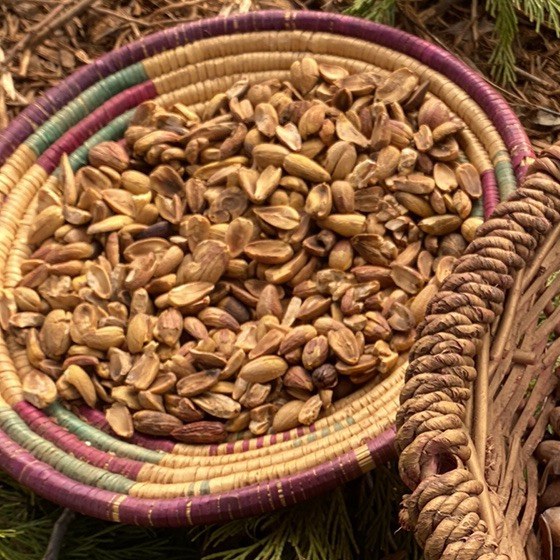
We hand-gather, shell, cold-leach and stone-grind our acorn flour in small batches here in Shasta County. We're sold out right now. Leave your name and email below and we'll let you know as soon as the next batch is ready.
Want to go deeper? Our Northern California Foraging Encyclopedia covers acorns and dozens of other local wild foods.


